
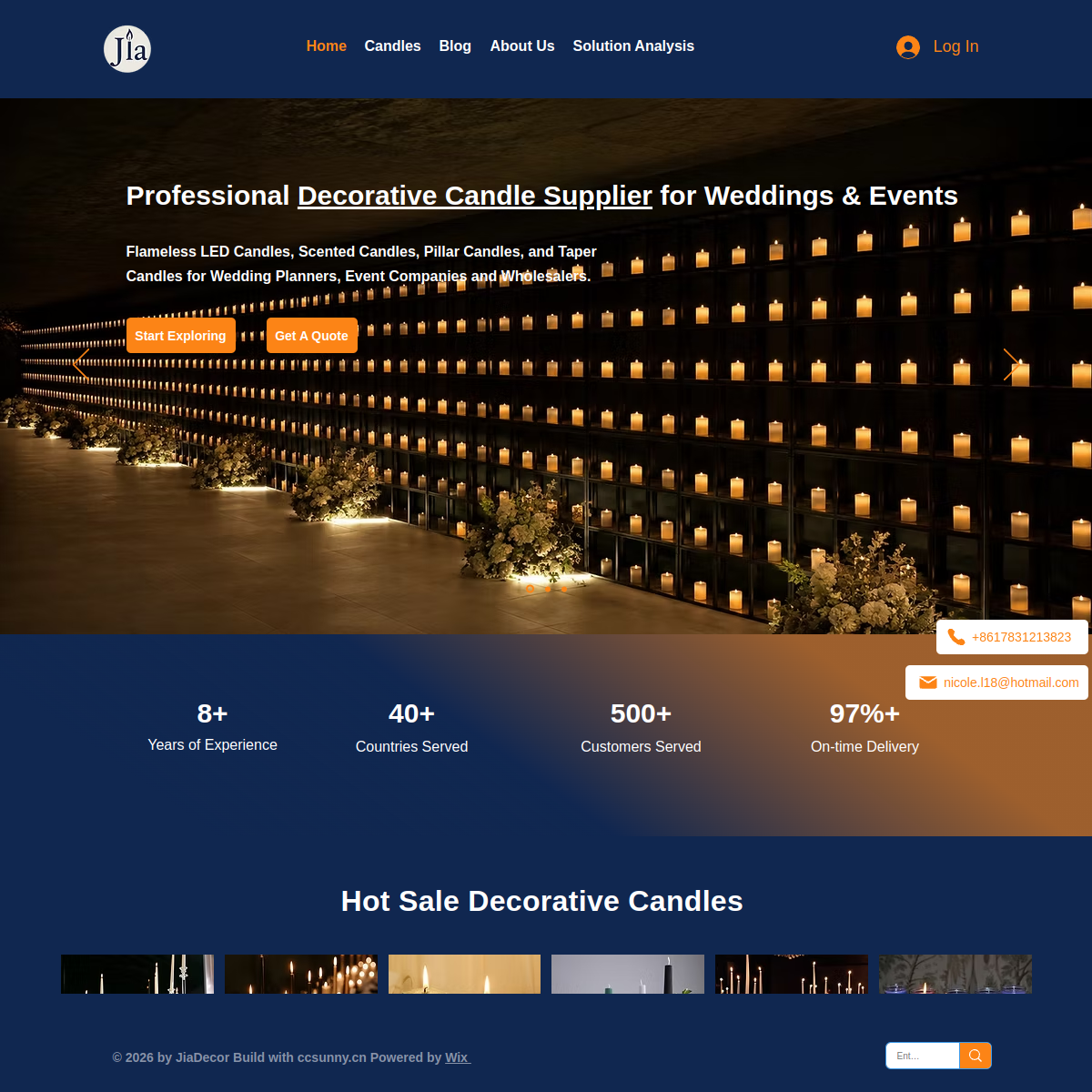
JiaDecor Candles supplies decorative candles for weddings, events, hospitality, parties and home decoration. We led the website work at jiadecor.com, treating the site as a catalogue and an enquiry-preparation tool rather than a single product landing page.
The first problem was taxonomy
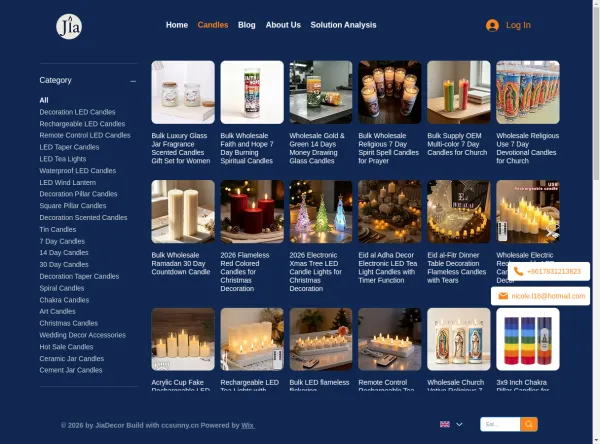
The navigation had to hold more than one kind of distinction at once. LED candles branch into rechargeable, remote-control, taper, tea-light and waterproof formats. Scented candles are organized partly by container and duration; pillar and taper candles branch again by shape and finish. Wedding accessories sit beside the candle catalogue, while the buying audience changes from an event planner to a rental operator or a wholesale buyer.
That is a taxonomy problem, not a copywriting problem. If technology, form, occasion and commercial model all compete at the same level, the visitor has to infer the catalogue logic from the menu. Search engines have the same problem: similar pages become difficult to distinguish when their page purpose is not clear.
Product detail before promotion
The useful work here was mostly editorial and structural. A decorative candle can be chosen for flame effect, form, fragrance, duration, weather exposure or the setting it needs to support. We kept those distinctions close to the product routes instead of hiding them in a generic capabilities paragraph. That gives a buyer a way to narrow the question before contacting the supplier.
The visual material follows the same principle. Wedding tables, outdoor aisles, concerts and hospitality settings show the application; factory and certificate material establish operational context. Product photography can create the initial cue, but the surrounding evidence helps a buyer decide whether the item belongs in a brief, a rental cycle or a wholesale range.
SEO follows the information architecture
The page hierarchy was designed to give search a cleaner interpretation of the catalogue. Product-family pages carry the broad intent; more specific pages can own terms such as rechargeable, remote-control, waterproof, tea-light, 7-day or 30-day candles without forcing every term into one page title. Use-case content supports discovery, while remaining distinct from product pages that need to answer specification and purchase questions. This is an architecture decision, not a reported ranking result.
The delivery also separates three content jobs: product pages explain what the item is, event imagery and solution content show where it is used, and factory or certificate material supports operational due diligence. The enquiry route stays visible across the catalogue, while customization, packaging, MOQ, DDP and urgent-order content gives buyers a more useful starting point for that conversation. This is especially important when the same site serves both a one-off event brief and an ongoing wholesale requirement.
What the project demonstrates
This project is a good example of a website job where the main challenge is not adding more pages. It is deciding which distinctions deserve a route, which should remain supporting attributes, and where audience context belongs in the journey. For JiaDecor, the shipped site makes that catalogue logic visible while leaving performance claims to evidence that can actually be measured.